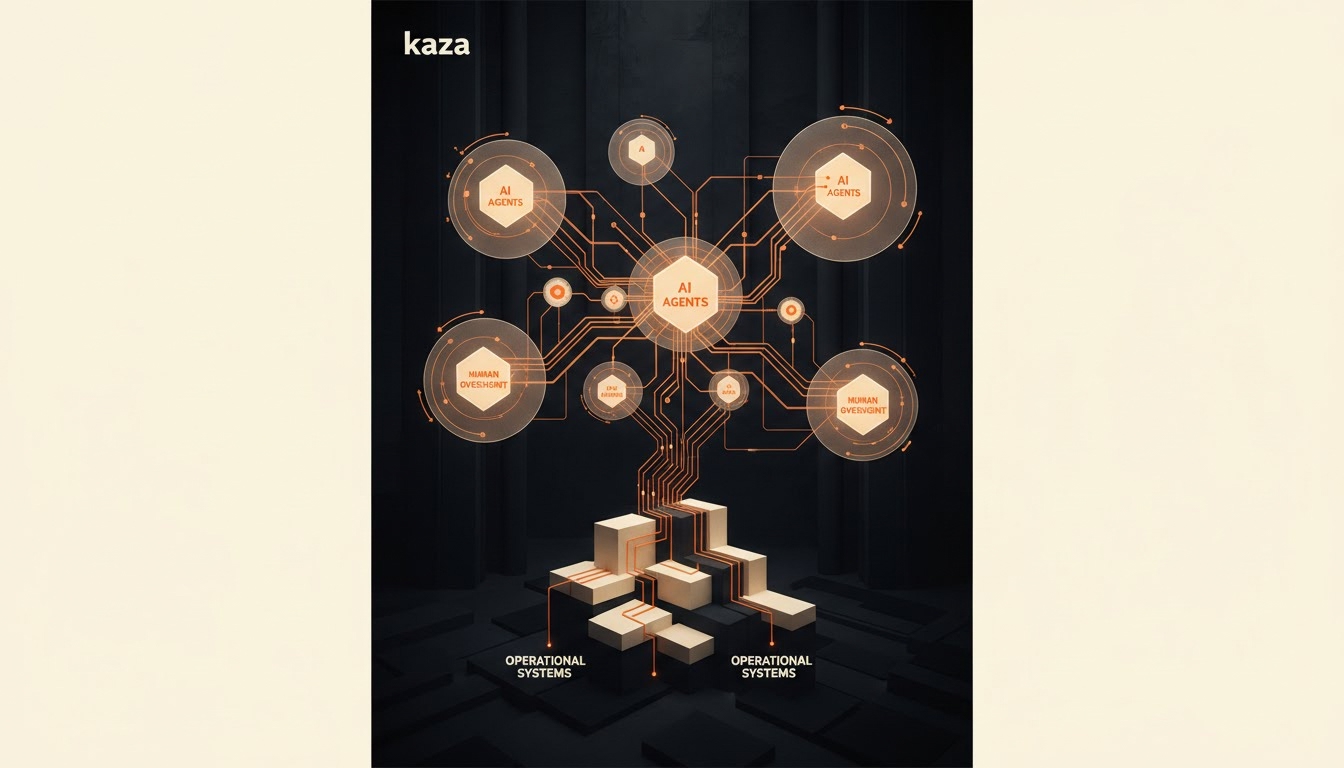
For IT, data, security, and governance leaders, deploying managed AI agents requires a clear understanding of workflow readiness. This assessment helps identify high-friction work suitable for agent-enabled solutions, ensuring that AI agents enhance operational capacity responsibly rather than automating existing inefficiencies.
A pragmatic approach separates fundamental process defects from challenges an AI agent can address. This guide provides a framework to evaluate workflows, establish necessary baselines, and identify disqualifying conditions, ensuring that any AI agent deployment aligns with organizational governance and operational objectives.
Understanding Workflow Stability and Process Defects
Before considering any AI agent deployment, it is crucial to ensure the underlying workflow is stable and well-defined. Attempting to automate an unstable or poorly documented process with an AI agent will likely amplify existing inefficiencies and lead to unpredictable outcomes, undermining operational capacity.
Process defects, such as unclear decision points, inconsistent data inputs, or redundant steps, must be addressed through process redesign. An AI agent excels at executing well-defined tasks, not at compensating for a flawed process. Distinguishing these issues is a foundational step in readiness assessment.
- Identify and eliminate redundant steps.
- Standardize data inputs and outputs.
- Document all decision points.
- Ensure process consistency over time.
Data Access, Quality, and Security as Foundations
The effectiveness of any AI agent is directly tied to the quality and accessibility of the data it processes. Organizations must establish robust mechanisms for data access, ensuring that agents can securely retrieve and process necessary information without compromising data integrity or privacy.
Poor data quality—inconsistent formats, missing values, or inaccuracies—is a disqualifying condition for AI agent deployment. Implementing baseline measures for data quality and security, aligned with frameworks like the NIST AI Risk Management Framework [1], is non-negotiable to ensure responsible operation.
- Verify data source reliability.
- Implement data validation rules.
- Establish secure data access protocols.
- Monitor data quality metrics regularly.
Integrating Human Review and Governance
Responsible AI agent deployment mandates clear human review points and a robust governance framework. AI agents should augment human operational capacity, not replace accountability. Leaders must define where human oversight is required, especially for critical decisions or outputs.
Governance policies, encompassing data privacy (e.g., PIPEDA in Canada), security, and ethical considerations, must be in place before deployment. This includes defining roles, responsibilities, and audit trails for agent actions, ensuring compliance and building trust in the system's outputs.
- Define human-in-the-loop points.
- Establish clear accountability for agent actions.
- Implement audit logging for all agent activities.
- Align with organizational AI governance policies.
Choosing the Right Intervention: Beyond Simple Automation
Not every high-friction workflow problem requires an AI agent. It is critical to differentiate between process redesign, Robotic Process Automation (RPA), dedicated SaaS solutions, and AI agents. RPA is suitable for highly repetitive, rule-based tasks, while SaaS offers off-the-shelf solutions for common business functions.
Managed AI agents are best suited for tasks requiring dynamic adaptation, complex reasoning, or processing unstructured data, where traditional automation falls short. Kaza diagnoses workflows to determine the most appropriate intervention, ensuring that AI agents are deployed where they add genuine, responsible execution capacity.
- Evaluate if process redesign is sufficient.
- Consider RPA for simple, structured tasks.
- Assess SaaS for common, well-defined functions.
- Reserve AI agents for complex, adaptive challenges.
Understanding AI Agent Delivery Models
Organizations considering AI agents must also evaluate the appropriate delivery model: internal build, platform configuration, or managed delivery. An internal build requires significant in-house AI expertise and infrastructure, offering maximum customization but higher operational overhead.
Platform configuration uses existing AI platforms, requiring less development but still demanding internal management. Managed AI agents, like those deployed by Kaza, offer a full-service approach, handling diagnosis, design, deployment, and continuous improvement, reducing the internal burden on IT and operational teams while ensuring responsible operation.
- Assess internal AI development capabilities.
- Evaluate the cost and complexity of platform configuration.
- Consider managed delivery for reduced operational burden.
- Align delivery model with organizational risk tolerance.
Assessing AI agent workflow readiness is a critical, multi-faceted exercise for operational leaders. By systematically evaluating workflow stability, data quality, governance, and the suitability of AI agents versus other interventions, organizations can ensure responsible and effective deployment.
A clear understanding of process defects versus agent-solvable problems, coupled with a pragmatic approach to delivery models, positions organizations to enhance operational capacity reliably. This diagnostic framework supports informed decisions, moving beyond hype to practical, measurable outcomes.
Frequently asked questions
What is a disqualifying condition for AI agent deployment?
A disqualifying condition includes an unstable or undocumented workflow, poor data quality, absence of clear human review points, or non-compliance with governance and security policies. These issues must be resolved before an AI agent can be responsibly integrated into operations.
How do I establish baseline measures for AI agent performance?
Establish baseline measures by quantifying current workflow metrics before agent deployment. This includes processing time, error rates, resource utilization, and throughput. These metrics provide a benchmark to objectively assess the AI agent's impact on operational capacity and efficiency.
How do managed AI agents differ from simple automation tools?
Simple automation tools, like RPA, execute predefined, rule-based tasks. Managed AI agents, in contrast, can adapt, learn, and make more complex decisions, often interacting with unstructured data. Kaza provides managed agents that handle this complexity, offering greater operational capacity.
What role does human review play in AI agent workflows?
Human review is critical for oversight, accountability, and ensuring responsible AI operation. It involves defining specific points where human intervention is required to validate agent decisions, correct errors, or approve outputs, especially in sensitive or high-impact workflows.
Can AI agents solve fundamental process defects?
No, AI agents are designed to execute tasks within a defined process, not to fix inherent process defects. Automating a flawed process with an AI agent will only make the flaws more efficient. Process redesign should always precede AI agent consideration for optimal results.