Workflow diagnosis
Find the operational friction worth fixing first, define a measurable baseline, and decide whether an AI agent, automation, or process change is the right intervention.
Three questions to guide the work
- Where does work stall or require repeated follow-up?
- Which decisions need human judgment?
- What baseline will prove that the intervention helped?
Move from research to an actionable decision
Guides in this topic


Evaluating Workflow Interventions: A Practical Scorecard for Operational Leaders
Operations leaders can use this practical scorecard to assess workflows and determine the most suitable intervention, from process redesign to managed AI agents, ensuring responsible and effective operational.
Read article →
Assessing Workflow Readiness for Managed AI Agents
Evaluate your organization's workflows for AI agent deployment. This guide helps distinguish process defects from agent-solvable problems, providing a readiness scorecard and decision path for executives.
Read article →
Build, Configure, or Manage: Choosing the Right AI Agent Operating Model
Decipher the best approach for AI agent deployment in business operations. Compare internal build, platform configuration, and managed delivery based on workflow needs and organizational capacity.
Read article →
Optimizing AI Agent Delivery: A Workflow-Driven Decision Framework
Navigate the build vs. buy decision for AI agents in business operations. This framework helps executives choose the right delivery model based on workflow complexity, internal capacity, and governance needs, ensuring.
Read article →
Choosing Your AI Agent Delivery Model: A Workflow-Centric Decision Guide
Navigate the build vs. buy decision for AI agents in business operations. This guide provides a workflow-specific framework to evaluate internal build, platform configuration, and managed delivery models, focusing on.
Read article →
Assessing Workflow Suitability: A Diagnostic for AI Agent Deployment
Evaluate your workflows for AI agent readiness. This guide helps executives distinguish process defects from agent-solvable problems, identify disqualifying conditions, and establish baseline measures for successful.
Read article →
Assessing Workflow Readiness for Managed AI Agents: A Practical Guide
Evaluate your workflow's readiness for managed AI agents with Kaza's practical assessment guide. Distinguish process defects from agent-solvable problems for effective implementation.
Read article →
Mapping Workflow Friction: A Prudent Path to AI Agent Implementation
Identify high-friction workflows before AI agent deployment. Learn to diagnose delays, rework, and queues to build operational capacity effectively and responsibly.
Read article →
Choosing Your First AI Agent Pilot: A Pragmatic Framework for Leaders
Learn how to select a bounded, high-value AI agent pilot that minimizes risk and maximizes learning for your organization. This guide provides a practical framework for IT and operational leaders.
Read article →
Choosing the Right Automation: AI Agent, RPA, or SaaS Workflow?
Navigate workflow automation choices: AI agents, RPA, or SaaS. Learn to select the best fit based on variability, judgment, and integration for safe, effective deployment.
Read article →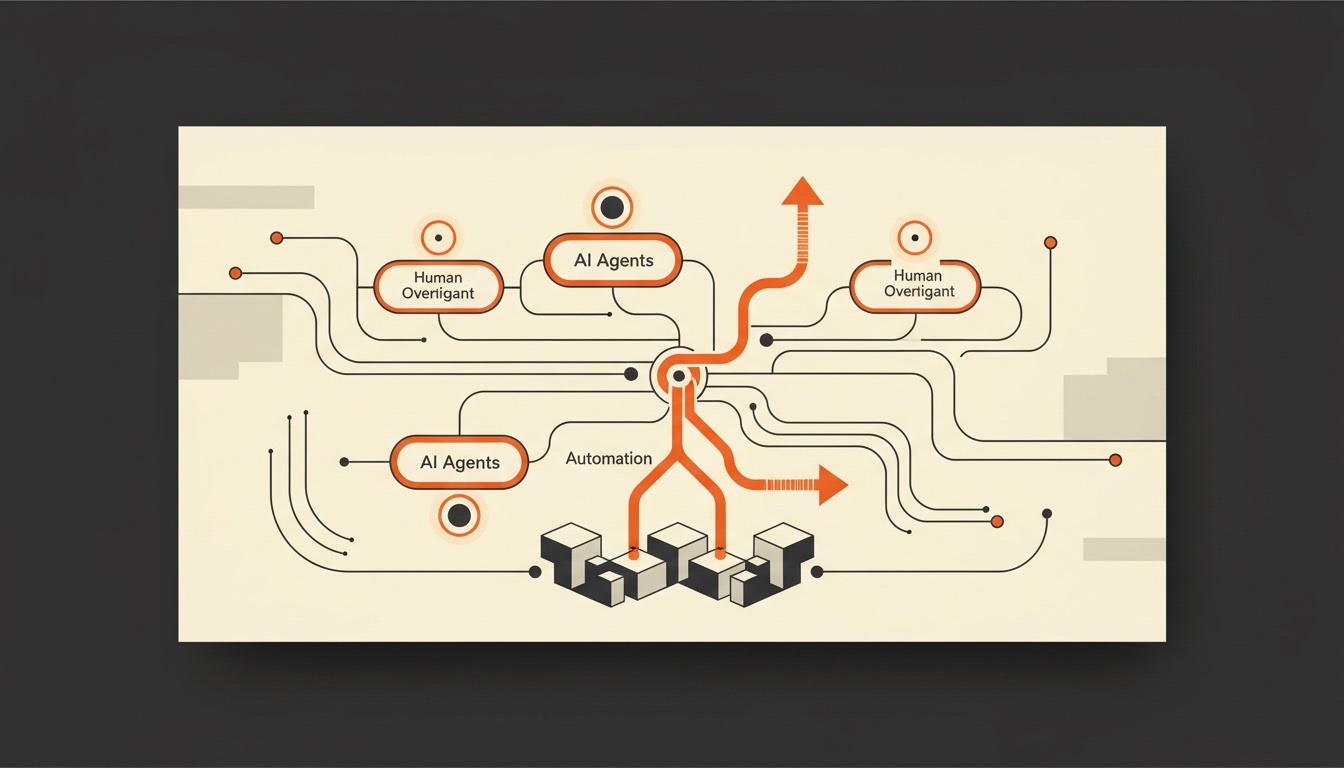
Choosing Your Operational Upgrade: AI Agents, Automation, or Process Refinement?
Understand the nuances between managed AI agents, traditional automation, and process improvement to select the most effective solution for your organization's workflow challenges.
Read article →
AI Agent Workflow Readiness: A Pragmatic Assessment for Operations Leaders
Operations leaders need a clear method to assess workflow readiness for AI agents. This guide helps distinguish process defects from true agent opportunities, ensuring responsible and effective deployment.
Read article →
Diagnosing Workflows for Effective AI Agent Deployment: A Practical Guide for Operational Control
This article provides IT, data, security, and governance leaders with a practical framework for diagnosing workflows and deploying managed AI agents without losing operational control.
Read article →