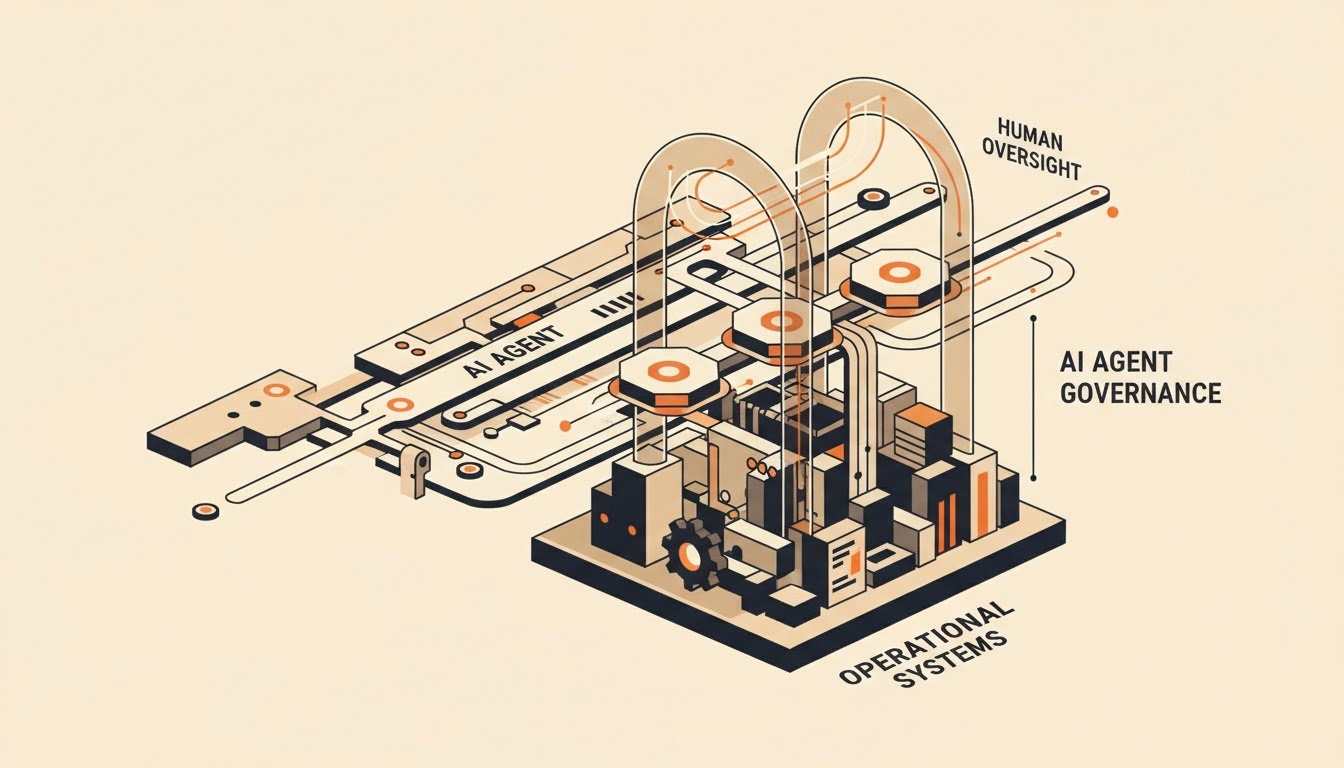
Integrating AI agents into critical workflows demands robust governance. Functional leaders must move beyond technical feasibility to assess organizational readiness and ensure responsible deployment. This requires a clear understanding of the controls, oversight, and auditability necessary to maintain trust and operational integrity.
This guide provides a practical checklist for evaluating AI agent delivery models, whether building internally, configuring a platform, or engaging a managed service like Kaza. It focuses on the governance requirements that ensure accountability, safety, and effective human review throughout the AI agent lifecycle.
Establishing Minimum Pre-Deployment Controls
Before any AI agent integrates into a workflow, minimum pre-deployment controls are essential to mitigate risks. These controls establish the foundational guardrails for data access, decision-making, and human intervention points. Without these, even well-intentioned deployments can introduce unforeseen vulnerabilities and compliance challenges.
Organizations must define clear data access policies, ensuring AI agents only interact with necessary information and adhere to privacy regulations. Establishing explicit human review thresholds and escalation paths is also critical. This ensures that complex or sensitive decisions always receive appropriate human oversight, maintaining accountability.
- Data access and usage policies
- Human review thresholds and triggers
- Error handling and fallback procedures
- Security and privacy compliance checks
Evidence a Provider Should Produce
When engaging an external provider for AI agent deployment, such as Kaza, demanding specific evidence is non-negotiable. This evidence demonstrates the provider's commitment to responsible AI practices and ensures alignment with your organization's governance standards. Transparency in operations builds necessary trust.
Providers should furnish detailed documentation on their AI agent's design, operational procedures, and audit capabilities. This includes comprehensive audit logs, explainability reports for decision-making, and robust incident response plans. Evidence of adherence to recognized frameworks, like the NIST AI Risk Management Framework [1], is also valuable.
- Detailed audit logs and traceability
- Explainability reports for agent decisions
- Incident response and recovery plans
- Security certifications and data protection policies
Identifying Red Flags and Escalation Conditions
Vigilance is crucial when deploying AI agents; certain red flags indicate potential governance failures or unacceptable risks. Recognizing these early prevents significant operational disruptions or reputational damage. An opaque process or a lack of clear accountability should immediately trigger concern.
Escalation conditions must be predefined to address these red flags promptly. Warning signs include a provider's inability to articulate their human review processes, a lack of clear data provenance, or resistance to providing audit trails. Any instance where an AI agent operates without clear oversight or an accessible human off-ramp warrants immediate review and potential suspension.
- Opaque agent decision-making
- Lack of clear human review process
- Resistance to providing audit logs
- Undefined failure modes or recovery
Retaining Accountability and Oversight
Regardless of the chosen delivery model—internal build, platform configuration, or managed AI agents—ultimate accountability for the AI agent's performance and ethical conduct remains with the deploying organization. Delegating implementation does not absolve the functional leader of responsibility for outcomes. Robust oversight mechanisms are paramount.
This involves establishing an internal governance committee or designated role responsible for continuous monitoring, performance review, and policy enforcement. Regular audits of AI agent activities, validation of human review processes, and periodic reassessment of risk profiles ensure ongoing compliance and operational integrity. This proactive approach sustains trust.
- Designated internal oversight body
- Regular performance and compliance audits
- Policy enforcement and updates
- Continuous risk assessment
Integrating Governance into the Workflow Lifecycle
Effective AI agent governance is not a one-time setup but an ongoing process integrated throughout the workflow lifecycle. From initial diagnosis to continuous improvement, governance ensures that AI agents remain aligned with organizational objectives and ethical standards. This continuous loop supports responsible innovation.
This integration means embedding governance considerations into every stage: design, deployment, monitoring, and iteration. It includes regular reviews of agent performance against expected outcomes, adapting to new risks, and updating policies as the operational context evolves. This systematic approach ensures that AI agents enhance, rather than compromise, operational capacity.
- Governance in design and development
- Continuous monitoring and performance review
- Adaptive policy updates
- Post-deployment audit and feedback loops
The decision to integrate AI agents into your workflows hinges on a thorough assessment of governance readiness. If your workflow involves sensitive data or critical decisions, requiring explicit human oversight and auditable processes, then a robust governance framework is non-negotiable. Should the evaluation reveal insufficient internal capacity for oversight or a provider's inability to demonstrate transparency, a different delivery model or a re-evaluation of the workflow's suitability for AI agent deployment is warranted.
Frequently asked questions
What is the primary difference between AI agent governance and general IT governance?
AI agent governance specifically addresses the unique risks of autonomous decision-making, data use, and potential for bias inherent in AI systems. It extends beyond traditional IT controls to include ethical considerations, explainability, and robust human review protocols, focusing on the agent's operational impact and accountability.
How do I ensure human review is effective for AI agents?
Effective human review requires clear thresholds for intervention, well-defined escalation paths, and trained personnel. It's not just about stopping an agent, but understanding why it flagged an item and providing corrective feedback. The process must be auditable, with clear documentation of human decisions and their impact on agent learning.
What kind of audit trails should I expect from an AI agent provider?
You should expect comprehensive, immutable audit trails detailing every action an AI agent takes, including data accessed, decisions made, and any human interventions. These logs should be time-stamped, user-attributed, and easily retrievable for compliance checks, incident investigation, and performance analysis. This ensures full transparency.
Can a voluntary framework like NIST AI RMF be legally binding?
No, the NIST AI Risk Management Framework [1] is a voluntary framework and not legally binding. However, it provides a robust, recognized structure for managing AI risks. Adopting its principles can demonstrate due diligence and responsible practices, which can be beneficial in regulatory contexts or for building stakeholder trust.
What is my accountability if a managed AI agent makes an error?
As the deploying organization, you retain ultimate accountability for the outcomes of any AI agent, even those managed externally. While a provider like Kaza is responsible for the agent's operational integrity, your organization is accountable for defining its scope, overseeing its performance, and ensuring its alignment with your ethical and business standards.