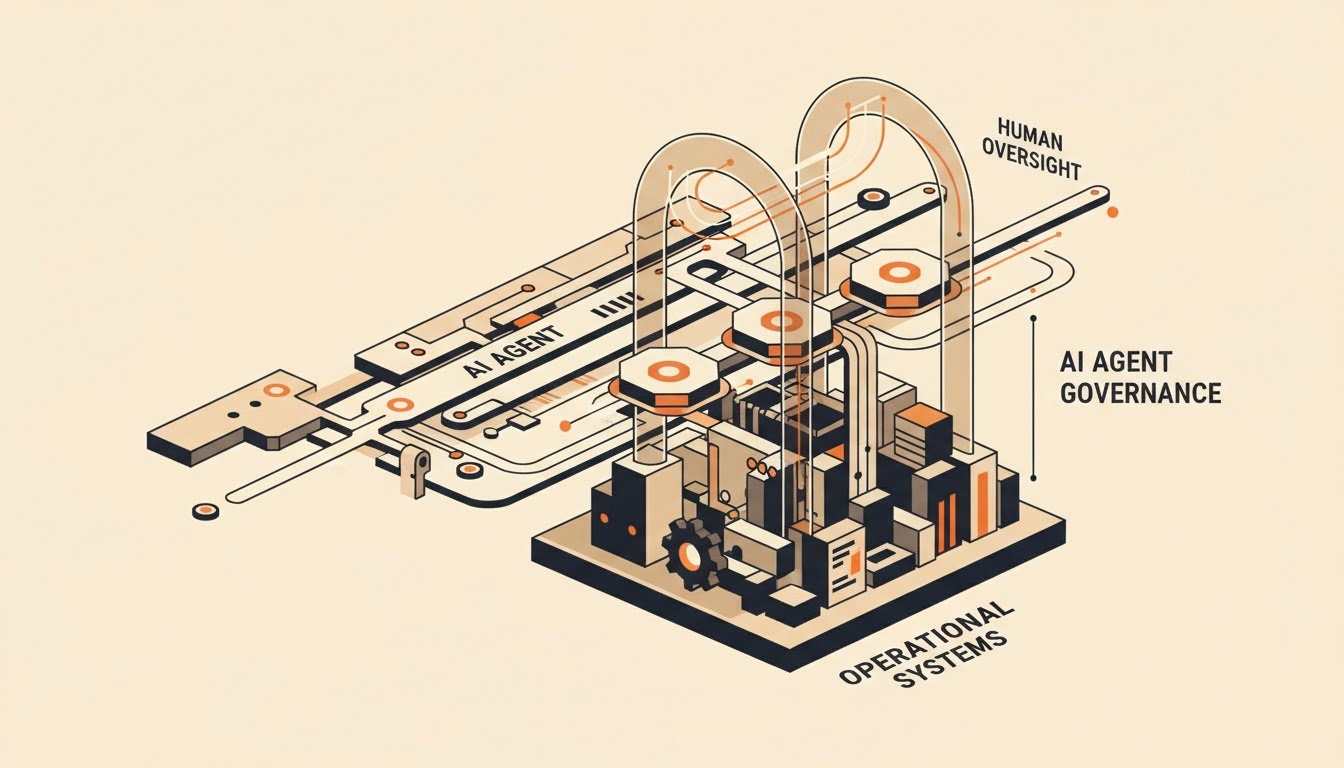
Deploying AI agents effectively requires more than just technical capability; it demands a robust governance framework tailored to your specific workflows. Functional leaders must move beyond generic discussions to concrete requirements that ensure accountability, transparency, and control, regardless of the chosen delivery model.
This guide provides a practical, workflow-specific checklist to help you evaluate internal build, platform configuration, or managed AI agent delivery approaches. By focusing on critical governance elements, you can make an informed decision that aligns with your organizational needs and risk appetite.
Establish Minimum Pre-Deployment Controls
Before any AI agent deployment, rigorously assess the workflow's potential impact and define precise data access protocols. This includes conducting a thorough impact assessment, similar to those outlined in public sector directives [3], to understand risks to individuals and the organization.
Ensure that data access for the AI agent is strictly limited to what is necessary for its function, following the principle of least privilege. Document all data sources, transformations, and storage locations, ensuring compliance with privacy regulations and internal security policies.
- Complete an AI impact assessment for the specific workflow.
- Define and restrict AI agent data access to essential data only.
- Document all data flows and storage for auditability.
- Establish clear data retention and deletion policies.
Demand Evidence of Oversight and Auditability
Regardless of the delivery model, your organization must demand explicit evidence of how AI agents are monitored and audited. This includes verifiable logs of agent actions, decisions, and any human interventions. The OECD AI Principles emphasize transparency and explainability as core to trustworthy AI [2].
For external providers, request detailed documentation on their governance frameworks, including how they address robustness, safety, and accountability. Ensure they can provide granular audit trails that demonstrate compliance with your internal policies and external regulations.
- Require comprehensive, immutable action logs from AI agents.
- Obtain documentation on provider's governance and audit frameworks.
- Verify mechanisms for tracing AI agent decisions to source data.
- Confirm adherence to transparency and explainability principles [2].
Identify Red Flags and Define Escalation Conditions
Proactive identification of red flags and clear escalation paths are vital for maintaining control over AI agents. This involves defining specific performance deviations, unexpected outputs, or security incidents that trigger immediate human review and intervention. The NIST AI Risk Management Framework highlights the importance of managing risk throughout the AI lifecycle [1].
Establish a clear protocol for when an AI agent's operation needs to be paused, rolled back, or reconfigured. This includes identifying the responsible parties for investigation, decision-making, and communicating the resolution to affected stakeholders.
- Define specific performance thresholds for human intervention.
- Outline unexpected outputs or security incidents as red flags.
- Establish clear escalation paths for AI agent anomalies.
- Designate responsible parties for investigation and resolution.
Implement Accountable Human Review and Oversight
Human review is not an optional add-on; it is a critical component of responsible AI agent deployment, particularly for high-impact workflows. Design explicit human-in-the-loop processes that allow for meaningful oversight, validation, and correction of AI agent outputs before they impact operations or individuals.
Ensure that human reviewers have the necessary context, tools, and authority to intervene effectively. This includes regular performance reviews of the AI agent, feedback mechanisms for continuous improvement, and a clear understanding of when human override is required.
- Integrate explicit human review points into the workflow.
- Provide human reviewers with context and tools for intervention.
- Establish feedback loops for continuous AI agent improvement.
- Define conditions and authority for human override of AI agent actions.
Retain Ultimate Accountability and Control
Even when leveraging managed AI agent services, your organization retains ultimate accountability for the outcomes and impacts of these systems. This means clearly defining roles and responsibilities, ensuring contractual agreements reflect governance requirements, and maintaining internal expertise to challenge and validate provider claims.
For a managed service, Kaza diagnoses workflows, designs the system, deploys it into existing tools, and continuously improves it, but the client remains responsible for defining the operational parameters and validating results. This ensures that the AI agent's actions align with organizational values and legal obligations.
- Clearly define internal roles and responsibilities for AI agent oversight.
- Ensure contractual agreements reflect all governance requirements.
- Maintain internal capacity to validate AI agent performance.
- Retain ultimate accountability for all AI agent outcomes.
Selecting the right AI agent delivery model hinges on a clear understanding of your workflow's unique governance requirements. By systematically evaluating pre-deployment controls, demanding evidence of oversight, defining escalation paths, and embedding robust human review, you can confidently choose between internal build, platform configuration, or managed delivery.
The next step is to apply this checklist to your specific workflow, documenting your requirements and assessing potential providers or internal capabilities against these criteria. This evidence-backed approach will guide your decision, ensuring your AI agent deployment enhances operational capacity responsibly and accountably.
Frequently asked questions
What is the primary difference between internal build and managed delivery for AI agent governance?
Internal build places full responsibility for governance infrastructure and execution on your team, requiring significant resources. Managed delivery, like Kaza's, provides pre-built governance frameworks and expertise, shifting the operational burden while you retain strategic oversight and accountability for outcomes.
How do voluntary frameworks like NIST AI RMF apply to private sector companies?
While voluntary, frameworks like the NIST AI Risk Management Framework [1] offer best practices for incorporating trustworthiness into AI systems. They provide a structured approach to identify, assess, and manage AI risks, which can be adapted by private sector companies to enhance their internal governance and demonstrate due diligence.
What specific evidence should I request from a managed AI agent provider regarding auditability?
You should request detailed logs of all agent actions, decision-making processes, data access records, and human intervention points. Ask for documentation on their data security protocols, compliance certifications, and how they ensure data integrity and non-repudiation, aligning with principles like those from OECD [2].
Can AI agents operate without human review in certain workflows?
While some low-impact, highly repetitive workflows might approach autonomous operation, critical or high-impact workflows always require human review points. This ensures accountability, allows for course correction, and manages unforeseen risks. The extent and frequency of human review should be determined by a thorough impact assessment.
How does Kaza ensure compliance with governance requirements for its managed AI agents?
Kaza integrates governance from the design phase, diagnosing workflows to build systems with auditable logs, defined human review points, and robust security protocols. We align with best practices from frameworks like NIST [1] and OECD [2], providing transparent evidence of compliance and supporting client accountability through continuous improvement.