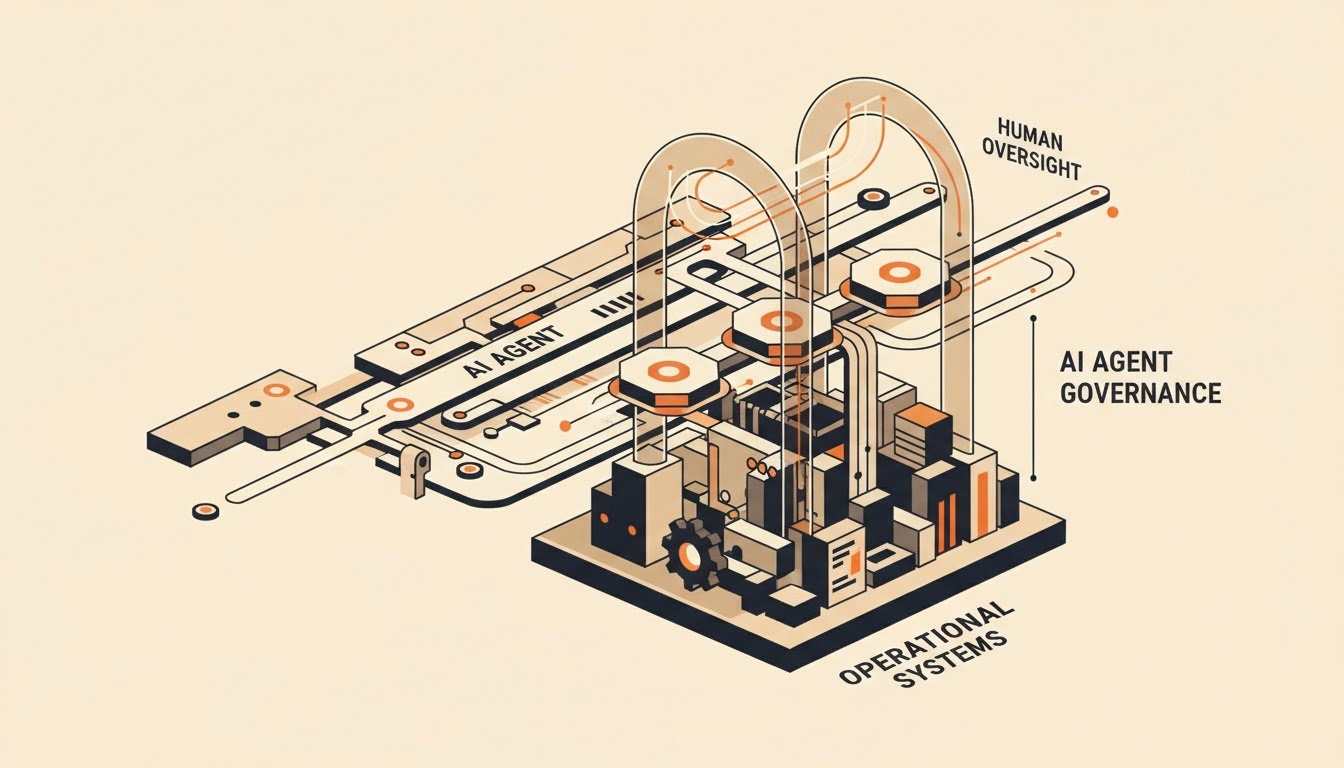
Establishing responsible AI governance is crucial for Canadian organizations looking to leverage AI agents for operational capacity. This involves more than just compliance; it's about building trust, ensuring safety, and maintaining oversight in how AI integrates into your workflows. A well-defined governance structure supports accountability and predictable outcomes.
This article provides a practical framework for executives to assess and implement AI governance. We focus on actionable steps, distinguishing between various AI applications, and understanding the nuances of Canadian guidance without misinterpreting public sector recommendations as universal private sector law. Our aim is to equip you for precise, responsible AI deployment.
Defining Scope and Boundaries for AI Agents
Responsible AI governance begins with precisely defining the scope of AI agents within your workflows. This means clearly identifying which tasks, processes, and data sets the AI will interact with, and importantly, what it will not. For Canadian organizations, this clarity helps manage expectations and mitigate risks associated with unforeseen operational impacts or data misuse.
Distinguishing between simple automation, chatbots, and sophisticated managed AI agents is a critical first step. While all leverage AI, their integration depth, decision-making complexity, and potential for autonomous action vary significantly. Understanding these differences ensures that governance measures are appropriately scaled and targeted, preventing over-governance of simple tools or under-governance of complex systems.
- Workflow-specific AI deployment
- Distinction between AI agent types
- Data interaction boundaries
- Exclusion criteria for AI involvement
Establishing Reusable Governance Practices
To ensure consistency and efficiency, organizations should develop reusable governance practices for AI agent deployment. This includes establishing standardized protocols for risk assessment, data handling, model validation, and ongoing monitoring. These practices, drawing inspiration from frameworks like NIST's AI RMF [1] functions (Govern, Map, Measure, Manage), provide a repeatable methodology for integrating AI responsibly across different business units.
Key reusable practices include mandatory human review checkpoints for critical decisions, robust audit trails to track AI actions and data access, and clear protocols for managing AI-induced errors or deviations. Applying these consistently across all managed AI agents fosters a culture of accountability and ensures that operational capacity is built on a foundation of trust and oversight.
- Standardized risk assessment procedures
- Mandatory human review protocols
- Comprehensive audit logging
- Change management for AI updates
The Crucial Role of Human Review and Oversight
Accountable human review is a cornerstone of responsible AI governance, especially for managed AI agents that augment operational capacity. This involves ensuring that humans remain in control, capable of intervening, overriding, or validating AI-driven decisions. The objective is not to replace human judgment entirely but to leverage AI as a precise tool that enhances human decision-making and execution.
Establishing clear escalation paths and review thresholds is paramount. For instance, AI agents handling sensitive data or impacting customer interactions must have predefined triggers for human intervention. This oversight mechanism is vital for safety, fairness, and maintaining trust, ensuring that AI operates within ethical boundaries and organizational values, rather than autonomously making critical choices without recourse.
- Defining human intervention triggers
- Establishing override protocols
- Ensuring AI complements human judgment
- Training personnel for AI oversight
Navigating Canadian Guidance and the Legal Boundary
Canadian organizations must carefully consider public guidance on AI, such as federal initiatives, without mistaking voluntary frameworks for binding private-sector law. While these sources offer valuable best practices for safety, fairness, and transparency, they do not constitute a comprehensive regulatory regime for AI in the private sector. It is essential to interpret these recommendations within their intended scope.
Understanding the legal advice boundary is critical. AI governance frameworks and best practices are not substitutes for legal counsel. Organizations must consult legal experts to ensure their AI deployments comply with existing privacy legislation (like PIPEDA), intellectual property laws, and any sector-specific regulations. This ensures that governance efforts are legally sound and address potential liabilities proactively.
- Interpreting public AI guidance pragmatically
- Distinguishing voluntary frameworks from law
- Consulting legal counsel for compliance
- Adhering to privacy legislation (e.g., PIPEDA)
Implementing AI Governance for Operational Capacity
The ultimate goal of AI governance is to enable the safe and effective expansion of operational capacity through managed AI agents. This requires a holistic approach that integrates governance into the entire AI lifecycle, from initial design and deployment to ongoing monitoring and improvement. Pragmatic governance ensures that AI investments yield tangible business value without compromising trust or safety.
Successful implementation hinges on organizational change management. This involves educating employees about AI's role, training them on new oversight responsibilities, and fostering a culture that embraces AI as a partner in achieving operational excellence. By building this foundation, organizations can confidently deploy AI agents to enhance efficiency, precision, and overall business performance.
- Integrating governance into the AI lifecycle
- Continuous monitoring and adaptation
- Employee education and training
- Fostering a culture of responsible AI use
Implementing responsible AI governance in Canada is an ongoing journey focused on building trustworthy operational capacity. The threshold for implementing stringent governance measures is crossed when an AI agent's workflow involves complex decision-making, significant data interaction, or direct impact on business outcomes.
A key observation that would change this recommendation is if the AI's function is purely informational with no decision-making authority or impact on sensitive data. In such cases, simpler oversight mechanisms might suffice, but continuous reassessment is always prudent.
Frequently asked questions
How do I distinguish between a simple automation tool and a managed AI agent for governance purposes?
Managed AI agents typically handle more complex, dynamic decision-making within multi-step workflows and may adapt over time. Simple automation or chatbots perform predefined tasks with limited variability. Governance should reflect this complexity, with managed AI agents requiring more robust oversight, auditability, and human review.
What are key reusable governance practices for AI agents?
Reusable practices include standardized risk assessments, mandatory human review points for critical outputs, comprehensive audit logging of AI actions and data access, and clear protocols for managing AI exceptions or failures. These ensure consistency and accountability across deployments.
Is Canadian public AI guidance legally binding for private companies?
Currently, most public AI guidance in Canada, like NIST's voluntary framework [1], offers best practices rather than legally binding requirements for private sector AI use. However, existing laws like PIPEDA regarding data privacy still apply and must be adhered to.
When is human review absolutely necessary for an AI agent's workflow?
Human review is essential when an AI agent's output directly impacts significant business decisions, customer outcomes, financial transactions, or could lead to adverse consequences if incorrect. It ensures accountability, fairness, and alignment with organizational values and legal obligations.
What is the boundary between AI governance and legal advice?
AI governance frameworks provide operational and ethical guidelines for AI deployment and oversight. Legal advice focuses on ensuring compliance with all applicable laws and regulations, such as privacy, intellectual property, and sector-specific rules. Organizations must consult legal counsel to navigate this critical boundary.