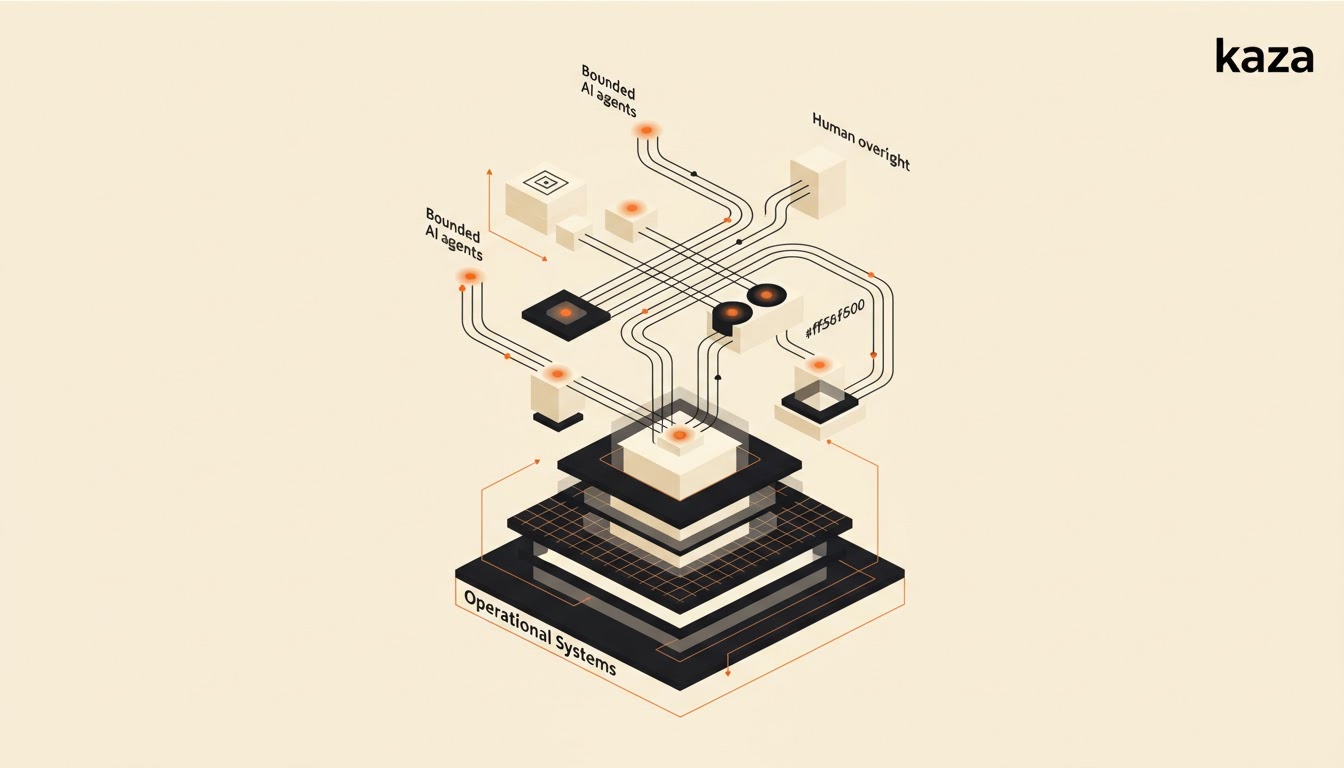
Scaling an AI agent pilot requires a deliberate, evidence-based approach, not just replicating initial success. The transition from a controlled pilot to broader deployment introduces new complexities in governance, security, and operational integration. Hasty expansion without robust frameworks can introduce significant operational debt and risk.
This guide provides IT, data, security, and governance leaders with a pragmatic framework to evaluate readiness for scaling. It emphasizes critical considerations such as control validation, clear ownership, and economic viability, ensuring managed AI agents enhance, rather than disrupt, your organization's operational capacity.
Establish Scale Gates Before Expanding
Before expanding any AI agent pilot, establish clear 'scale gates' that must be met. These gates are objective criteria, including performance metrics, risk assessments, and confirmed economic value, which validate the agent's readiness for broader deployment. Without these, scaling becomes a gamble, not a strategic move.
These gates should encompass technical stability, security compliance, and adherence to ethical guidelines. For instance, a gate might require the agent to maintain a 99% accuracy rate over three months with zero critical security incidents. This rigorous approach ensures that only proven, trustworthy managed AI agents advance.
- Define objective performance and risk criteria.
- Ensure security and compliance checks are integrated.
- Validate economic benefits before expansion.
Prioritize Workflow Decisions Over Platform Expansion
When scaling, prioritize decisions based on specific workflows rather than immediate platform-wide deployment. Focusing on individual workflows allows for deeper integration, tailored controls, and more manageable risk. This approach prevents the rapid accumulation of operating debt that often accompanies broad, undifferentiated rollouts.
Managed AI agents are most effective when precisely aligned with specific operational needs. By optimizing an agent for a distinct workflow, you can refine its performance, establish robust human review processes, and measure its impact more accurately, building a solid foundation for future, controlled expansion.
- Focus on specific, high-impact workflows first.
- Tailor agent capabilities to precise operational needs.
- Avoid premature, broad platform deployments.
Address Operating Debt Proactively
Operating debt, the accumulated cost of technical and process shortcuts, can cripple AI agent scalability. Proactively addressing this means designing for maintainability, security, and human review from the pilot phase. Ignoring these aspects leads to escalating costs and reduced operational capacity as agents are scaled.
This includes ensuring clear documentation, robust error handling, and accessible audit trails. The NIST AI Risk Management Framework (AI RMF) emphasizes GOVERN and MANAGE functions, which are crucial for mitigating operating debt by establishing clear responsibilities and continuous monitoring [1]. Effective management prevents future rework and ensures sustainable growth.
- Design for maintainability and clear documentation.
- Integrate robust error handling and audit trails.
- Establish continuous monitoring and governance.
Define Clear Ownership and Accountability
Successful scaling hinges on clearly defined ownership and accountability for each managed AI agent. Without a designated owner, issues like performance degradation, security vulnerabilities, or compliance breaches can go unaddressed, leading to operational failures. This clarity is essential for effective governance and incident response.
Ownership extends beyond technical oversight to include business process integration and performance monitoring. The owner is responsible for ensuring the AI agent continues to deliver value, adheres to organizational policies, and integrates seamlessly with human teams. This prevents ambiguity and ensures proactive management throughout the agent's lifecycle.
- Assign clear owners for each AI agent.
- Define responsibilities for performance and compliance.
- Ensure seamless integration with human workflows.
Integrate Human Review and Oversight
Scaling AI agents necessitates integrating robust human review and oversight mechanisms. Even highly autonomous agents require human intervention for exceptions, complex decisions, and continuous learning. This ensures quality, mitigates risks, and builds trust in the system, especially as the agent's scope expands.
Design workflows so that human review is a natural, integrated step, not an afterthought. This includes defining thresholds for human escalation, establishing clear communication channels between agents and human operators, and providing tools for efficient review. This partnership between managed AI agents and human teams is fundamental to responsible scaling.
- Design human review into agent workflows.
- Define clear escalation thresholds for exceptions.
- Provide tools for efficient human oversight.
The next decision for IT and data leaders is to define specific scale gates for your existing AI agent pilots. This requires an evidence threshold: the pilot must consistently demonstrate its intended value, pass all security and compliance checks, and have a clear, quantified economic benefit. Without this evidence, further scaling is premature.
The observation that would change this recommendation is a sudden, critical operational need that cannot be met by existing human or automated processes, and where a partially validated AI agent offers the only viable, albeit riskier, solution. In such cases, a highly controlled, limited-scope emergency deployment might be considered, but with heightened monitoring and immediate human oversight.
Frequently asked questions
What is a 'scale gate' in the context of AI agent deployment?
A 'scale gate' is a predefined set of objective criteria that an AI agent pilot must meet before it can be expanded. These criteria typically include performance metrics, risk assessments, security compliance, and verified economic value, ensuring controlled and responsible scaling.
How does operating debt apply to AI agents?
Operating debt for AI agents refers to the accumulated costs and risks from technical shortcuts, poor documentation, or inadequate governance during development. Scaling an agent with significant operating debt leads to increased maintenance, security vulnerabilities, and reduced operational efficiency over time.
Should we scale AI agents broadly or workflow-by-workflow?
Prioritize scaling AI agents workflow-by-workflow. This allows for deeper integration, tailored controls, and more manageable risk. Broad, platform-wide deployment often introduces significant complexity and operating debt without sufficient validation of the agent's specific value in diverse contexts.
What role does human review play in scaling AI agents?
Human review is critical for scaling AI agents responsibly. It provides oversight for exceptions, complex decisions, and continuous learning, ensuring quality and mitigating risks. Integrating human review as a natural workflow step builds trust and maintains control as agent autonomy increases.
How can the NIST AI RMF help with scaling decisions?
The NIST AI RMF provides a voluntary framework for managing AI risks, which is highly relevant to scaling. Its GOVERN and MANAGE functions guide organizations in establishing clear responsibilities, continuous monitoring, and impact assessments, helping to ensure trustworthiness during expansion [1].