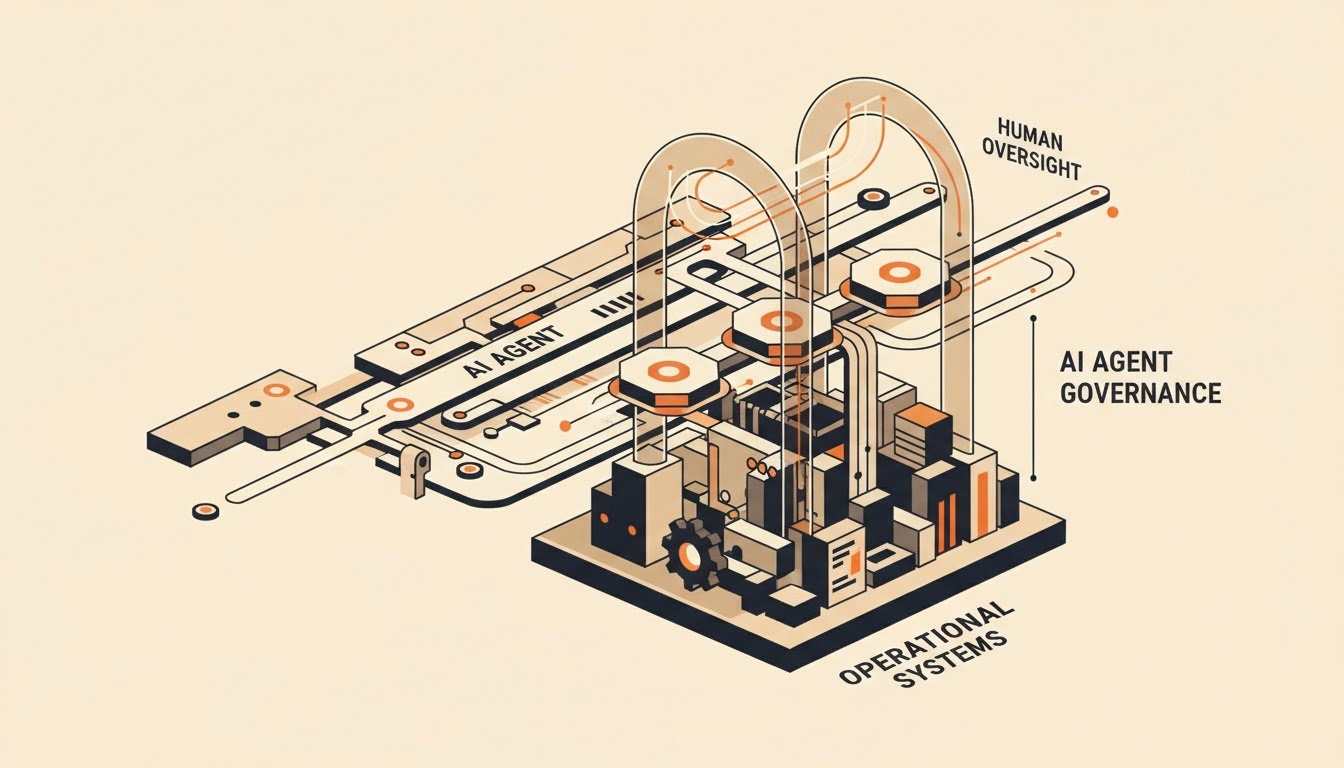
Deploying AI agents effectively requires more than just technical capability; it demands a clear governance framework to ensure safety, accountability, and trust. Leaders must move beyond simple build-versus-buy decisions to evaluate delivery models based on their ability to meet stringent oversight and auditability requirements.
This article provides a practical checklist for assessing different AI agent delivery approaches. It focuses on the evidence required from providers, the minimum pre-deployment controls necessary, and critical red flags to consider, ensuring your organization maintains control and trust throughout the AI agent lifecycle.
Establishing Minimum Pre-Deployment Controls
Before any AI agent deployment, organizations must ensure foundational controls are in place to manage risk and maintain trust. This includes clear data access policies, robust model validation, and defined human review protocols. These controls are non-negotiable, regardless of whether you build internally or engage a third-party provider.
Evidence of these controls should be documented and auditable. For instance, data access policies must detail who can access what data, for what purpose, and under what conditions. Model validation reports should demonstrate fairness, accuracy, and resilience against adversarial attacks, ensuring the agent performs as expected in diverse scenarios.
- Data access policies and encryption standards.
- Model validation reports and bias assessments.
- Human review and escalation protocols.
- Security architecture and penetration testing.
Demanding Evidence from External Providers
When engaging an external provider for AI agent delivery, it is crucial to demand concrete evidence of their governance practices. A provider should furnish documentation detailing their approach to data privacy, security, and ethical AI development. This includes their adherence to relevant standards and frameworks, such as the NIST AI Risk Management Framework [1].
Providers of managed AI agents, for example, must demonstrate their capacity for ongoing monitoring, incident response, and continuous improvement. This evidence should extend to their internal processes for managing AI agent lifecycles, including version control, performance tracking, and the mechanisms for human override or intervention when necessary.
- Provider's security certifications (e.g., ISO 27001).
- Data privacy impact assessments.
- AI model lifecycle management documentation.
- Incident response and disaster recovery plans.
Identifying Red Flags and Escalation Conditions
Vigilance for red flags is paramount when evaluating AI agent delivery models. Opaque processes, a lack of clear audit trails, or an inability to provide detailed documentation on model behaviour are significant concerns. Any provider unwilling to disclose their governance framework or demonstrate how they address potential biases should be viewed with caution.
Escalation conditions must be predefined. If an AI agent exhibits unexpected behaviour, performance degradation, or raises ethical concerns, there must be a clear path for human intervention and resolution. This includes immediate shutdown capabilities, investigation protocols, and a transparent communication plan with stakeholders, ensuring rapid and accountable responses.
- Lack of transparency in AI model development.
- Absence of clear audit trails or logging.
- Unwillingness to define human-in-the-loop processes.
- Generic or vague security and privacy policies.
Ensuring Accountable Human Review
Regardless of the automation's sophistication, accountable human review remains a cornerstone of effective AI agent governance. This means defining specific roles and responsibilities for overseeing agent performance, validating outputs, and intervening when necessary. Human review ensures that AI agents align with organizational values and legal requirements, especially in sensitive workflows.
The design of human review processes should be integrated from the outset, not as an afterthought. This includes setting thresholds for escalation, training human operators, and establishing feedback loops to improve agent performance and governance. It is the human element that ultimately bears responsibility for the AI agent's actions and outcomes.
- Defined roles for AI agent oversight and validation.
- Clear thresholds for human intervention.
- Training programs for human reviewers.
- Feedback mechanisms for continuous improvement.
Retaining Organizational Control and Auditability
Organizations must retain ultimate control and auditability over all AI agent deployments, irrespective of the delivery model. This means ensuring that all actions taken by an AI agent are logged, traceable, and explainable. The ability to reconstruct an agent's decision-making process is vital for compliance, incident investigation, and demonstrating due diligence.
Establishing a clear chain of custody for data and decisions is essential. This includes understanding data provenance, how data is transformed, and how it influences agent behaviour. Regular audits, both internal and external, should verify that governance policies are being followed and that the AI agent's operational capacity remains within defined parameters.
- Comprehensive logging and audit trails.
- Data provenance and transformation records.
- Regular internal and external governance audits.
- Defined ownership for AI agent outcomes.
The next decision involves selecting the most appropriate AI agent delivery model for your organization. This choice is justified when the workflow evidence clearly indicates a need for adaptive, intelligent automation beyond simple rule-based systems. A shift in recommendation would occur if the required governance evidence or auditability cannot be demonstrably met by a proposed solution.
Frequently asked questions
What is the primary difference between AI agents and simple chat tools?
AI agents possess operational capacity to execute tasks autonomously within workflows, often involving complex decision-making and learning. Simple chat tools typically facilitate communication or provide information, lacking the direct execution capabilities of an AI agent.
How does the NIST AI Risk Management Framework [S1] apply to AI agent governance?
The NIST AI RMF [1] provides a voluntary framework to manage AI risks, focusing on govern, map, measure, and manage functions. It helps organizations incorporate trustworthiness into AI systems, offering a structured approach to identifying, assessing, and mitigating risks associated with AI agent deployment.
What evidence should I request from a managed AI agent provider regarding data access?
You should request detailed data access policies, encryption standards, data residency commitments, and audit logs demonstrating who accessed what data, when, and why. Ensure they provide proof of compliance with relevant data protection regulations and industry best practices.
When should I consider an internal build versus a managed delivery model for AI agents?
Consider an internal build if you have significant in-house AI expertise, resources, and a strong governance framework. Opt for managed delivery when you require specialized expertise, faster deployment, and a partner to handle the end-to-end operational capacity and continuous improvement, while retaining oversight.
What are the key components of an effective human review process for AI agents?
An effective human review process includes clear escalation triggers, defined roles for human operators, comprehensive training, and a robust feedback loop. It ensures humans can intervene, correct, and provide insights to continuously improve agent performance and maintain ethical alignment.