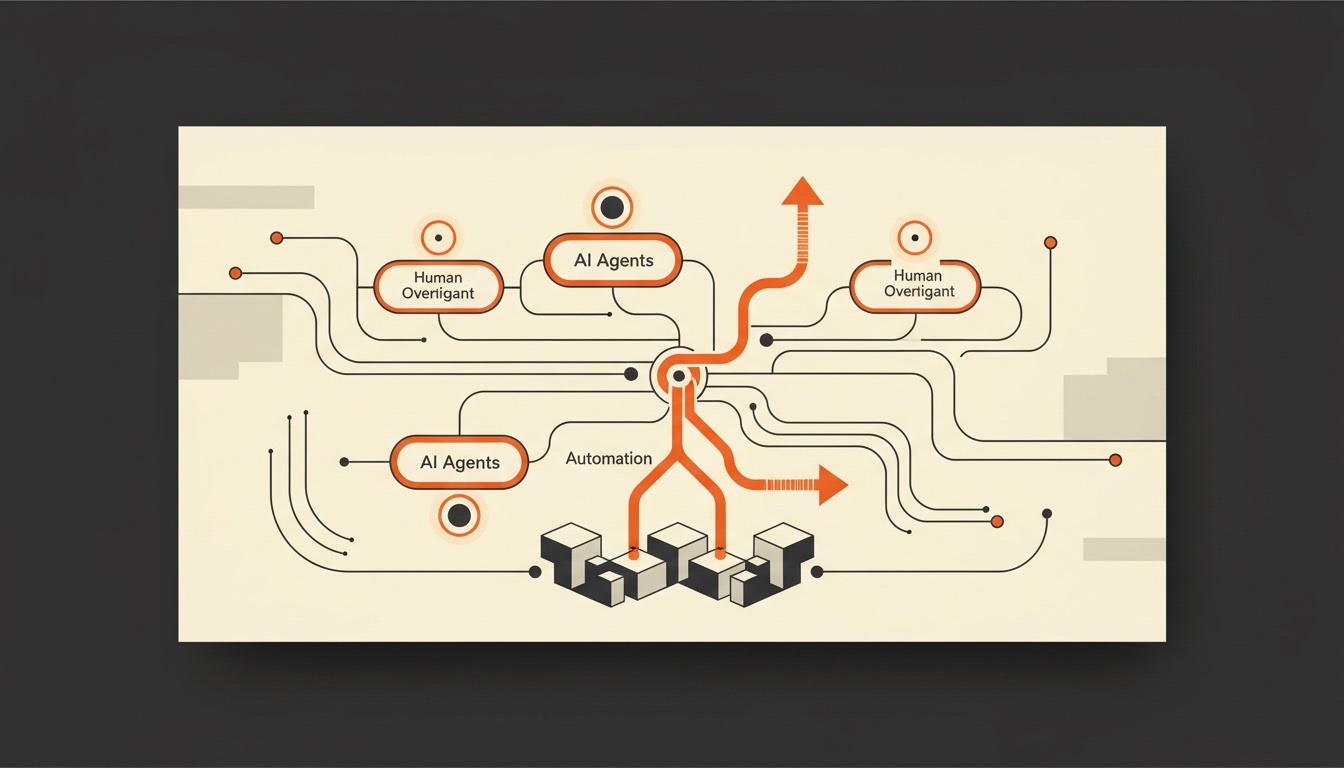
Organizations seeking to enhance operational capacity often face a choice: implement managed AI agents, deploy traditional automation, or refine existing processes. Each approach addresses workflow friction differently, offering distinct benefits and requiring specific conditions for success. Understanding these differences is crucial for making informed decisions that align with business objectives and resource availability.
This article provides a framework for evaluating these options. We focus on diagnosing workflow bottlenecks and selecting the most precise intervention, whether it's a sophisticated AI agent, a targeted automation script, or a streamlined workflow. Our aim is to guide leaders toward pragmatic solutions that deliver tangible improvements without unnecessary complexity or risk.
Diagnosing Workflow Friction: The First Step
Effective operational upgrades begin with a precise diagnosis of workflow friction. This involves identifying specific points where work slows down, errors occur, or resources are misapplied. The goal is to pinpoint the root cause of inefficiency, not just the symptoms. Understanding the nature of the friction—whether it's repetitive manual effort, complex decision-making, or inefficient sequencing—dictates the appropriate solution.
Our approach prioritizes identifying the smallest intervention that resolves the operating constraint. This means avoiding over-engineering. A deep dive into how work actually flows, including common exceptions and deviations, is critical. This diagnostic phase ensures that the chosen solution directly addresses the identified bottleneck, leading to more targeted and effective improvements in operational capacity.
- Map current workflow steps and identify bottlenecks.
- Quantify the impact of friction (time, cost, error rate).
- Distinguish between task-level and process-level issues.
- Assess the variability and complexity of tasks within the workflow.
When to Choose Process Improvement
Process improvement is the foundational layer for enhancing operational capacity. It focuses on optimizing the sequence and logic of existing tasks, eliminating redundancy, and standardizing procedures. This approach is most effective when the core issue lies in how work is organized or sequenced, rather than in the inherent difficulty of individual tasks.
This intervention is suitable for workflows that are conceptually sound but suffer from inefficiencies like unnecessary approvals, duplicated effort, or unclear handoffs. By refining the process itself, organizations can achieve greater speed, reduce errors, and improve predictability without introducing new technologies. It's about making the existing system work better before considering more complex solutions.
- Eliminate redundant steps and approvals.
- Clarify roles, responsibilities, and handoffs.
- Standardize procedures for consistency.
- Simplify complex decision points through clearer guidelines.
Leveraging Traditional Automation
Traditional automation, such as Robotic Process Automation (RPA) or scripting, excels at handling repetitive, rule-based tasks with predictable inputs and outputs. These solutions are designed to mimic human actions on digital interfaces or execute predefined sequences of commands. They are highly effective for tasks that are performed frequently and consistently, freeing up human resources for more complex work.
The key to successful traditional automation lies in task predictability. If a task follows a strict set of 'if-then' rules and its outcome is always the same, it's a prime candidate. However, these systems struggle with variability, exceptions, or tasks requiring judgment. Implementing automation for highly dynamic processes can lead to brittle systems that frequently break or require extensive maintenance.
- Automate data entry and transfer between systems.
- Execute routine report generation.
- Perform scheduled system checks and maintenance.
- Handle simple, rule-based form submissions.
Deploying Managed AI Agents for Complex Tasks
Managed AI agents represent a significant step up in capability, designed for complex, variable tasks that require judgment, pattern recognition, and learning. Unlike simple automation, AI agents can process unstructured data, understand context, and adapt their behaviour based on new information or outcomes. They augment human operational capacity by performing tasks that were previously too complex or dynamic for traditional tools.
These agents are ideal for scenarios involving nuanced decision-making, natural language processing, or predictive analysis. For example, they can triage complex support tickets, analyze large volumes of documents for specific insights, or identify subtle anomalies in data that indicate potential risks. Successful deployment requires clear objectives, robust data pipelines, and a framework for ongoing monitoring and human review.
- Triage and categorize complex incoming requests.
- Extract insights from unstructured documents.
- Identify subtle patterns or anomalies in data.
- Provide recommendations based on evolving conditions.
Example: handle invoice exceptions without expanding authority
Take an invoice-exception queue: a case arrives with missing data, a value mismatch, or an ambiguous approval rule. If a rule or better intake removes most cases, start there. If the finance system covers the standard case, SaaS workflow automation may be enough; an agent is justified only when the case requires reading context, preparing a recommendation, and presenting the exception to an accountable person.
Internal build fits when a team can own the workflow's integration, evaluation, security, and operations. Platform configuration fits when an existing product covers the needed controls and interfaces. Managed delivery can reduce cross-functional coordination burden, but the buyer retains process ownership, decision rights, risk acceptance, and evidence requirements.
- Sample exceptions before choosing the tool.
- Keep a person accountable for approvals and thresholds.
- Compare delivery effort with the workflow's actual complexity.
Your next decision is to classify one high-volume workflow against the four options in the table. Choose an AI agent only when real cases show a need for context after rules, SaaS workflow automation, and human ownership have been tested. Reconsider that choice when exceptions, reversibility, or decision rights make human review insufficient.
Frequently asked questions
What is the primary difference between AI agents and simple automation tools?
Simple automation follows predefined rules for repetitive tasks. Managed AI agents, however, can handle variability, learn from data, and make judgments, making them suitable for more complex, dynamic, and nuanced operational challenges.
When should I prioritize process improvement over automation or AI agents?
Prioritize process improvement when the workflow itself is inefficient, redundant, or poorly sequenced. If the core issue is the 'how' work is done, rather than the complexity of individual tasks, refining the process is the most direct and often least costly solution.
How do I ensure safe deployment of managed AI agents?
Safe deployment involves rigorous testing, defining clear operational boundaries, establishing robust data governance, implementing continuous monitoring, and ensuring a defined process for human review and intervention for critical decisions or exceptions.
Can I combine these approaches for a complex workflow?
Yes, often the most effective solutions involve a hybrid approach. For instance, a process might be improved, with repetitive steps automated, and complex decision points handled by managed AI agents, all under human oversight.
What are the risks of choosing the wrong intervention?
Choosing the wrong intervention can lead to wasted investment, increased complexity, system fragility, and failure to resolve the actual workflow friction. Over-automating complex tasks or under-automating simple ones can create new bottlenecks or operational risks.