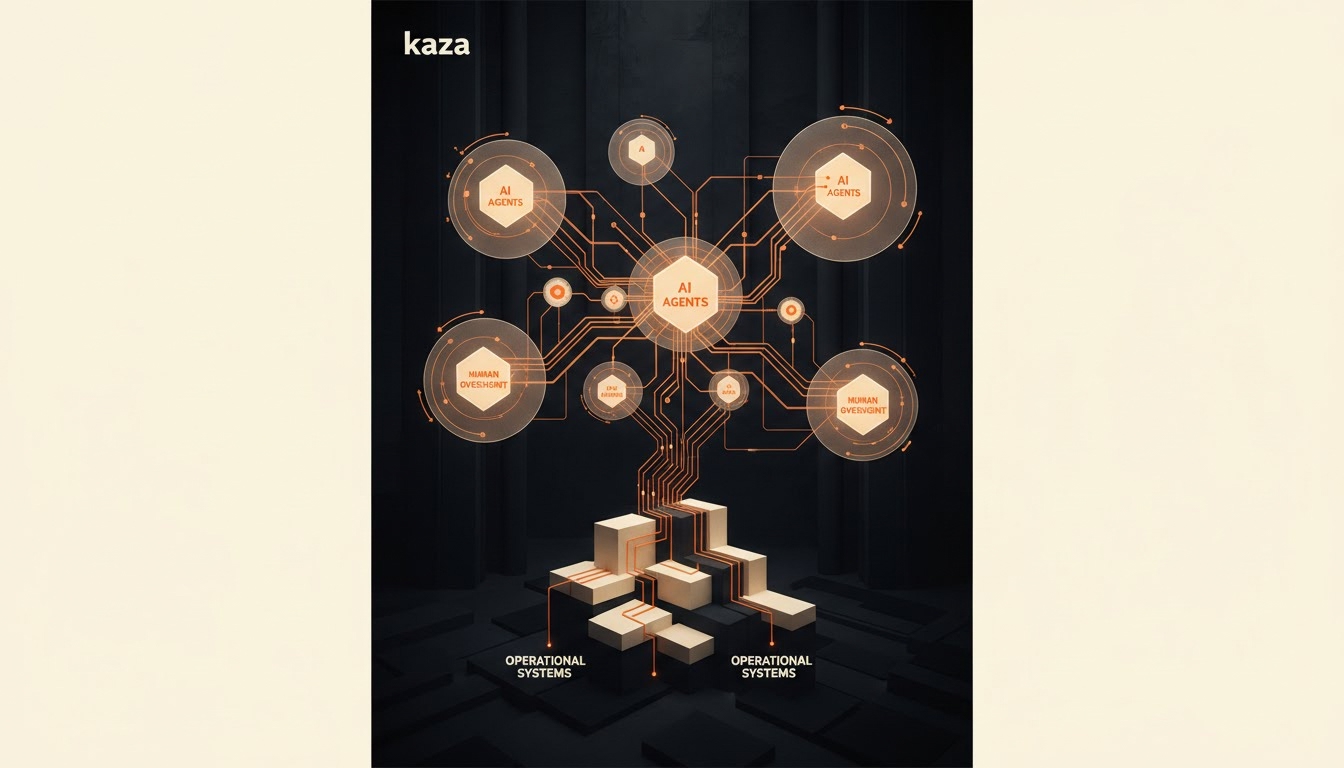
Integrating managed AI agents into an organization requires a strategic, evidence-based approach. The initial step is not about the technology itself, but a deep understanding of existing workflows. Pinpointing areas of significant friction ensures that AI solutions address genuine operational challenges, rather than merely automating inefficient processes.
Executives and transformation leaders must identify where delays, rework, queues, and inconsistent decisions impede operational capacity. A structured diagnostic process allows for the precise targeting of AI agent capabilities, maximizing their impact and fostering a responsible deployment that aligns with business objectives and organizational readiness.
The Imperative of Workflow Diagnosis
Before considering managed AI agents, organizations must diagnose their workflows to identify high-friction areas. This diagnostic phase is crucial for ensuring AI deployments are strategic and value-driven, rather than merely automating existing inefficiencies. A clear understanding of current operational bottlenecks is the foundation for effective AI integration.
Focusing on where work gets stuck, repeated, or requires excessive human intervention provides a roadmap for AI agent application. This disciplined approach ensures that Kaza's managed AI agents are deployed to solve real problems, enhancing operational capacity and delivering tangible benefits, while maintaining appropriate human oversight and governance.
- Identify specific points of operational friction.
- Understand the root causes of delays and rework.
- Ensure AI agents address genuine business needs.
Conducting a Workflow Mapping Workshop
A structured workflow mapping workshop is essential to uncover friction points. Gather cross-functional teams who actively participate in or are affected by the workflow. The goal is to visually represent the current state, identifying every step, decision point, and handoff. This collaborative exercise reveals hidden inefficiencies and unarticulated challenges.
During the workshop, encourage participants to highlight where delays occur, where information is frequently missing, or where rework is common. This qualitative data, combined with quantitative metrics, forms a comprehensive picture of the workflow's health. The output should be a detailed map, annotated with friction points and their perceived impacts.
- Involve diverse stakeholders in mapping sessions.
- Visually represent current workflow steps and dependencies.
- Document all observed friction points and their impacts.
Collecting Evidence of Friction
To validate observations from mapping workshops, collect concrete evidence of friction. This includes quantitative data such as cycle times, error rates, queue lengths, and resource utilization reports. Qualitative evidence can come from stakeholder interviews, employee feedback, and customer complaints. Triangulating these data points provides a robust understanding of problem areas.
Evidence should clearly link specific friction points to their operational consequences, such as increased costs, reduced throughput, or compliance risks. This data-driven approach allows for objective prioritization and helps build a compelling business case for AI agent intervention, demonstrating where managed AI agents can deliver the most significant improvements to operational capacity.
- Gather quantitative data: cycle times, error rates.
- Collect qualitative insights: interviews, feedback.
- Link evidence directly to operational consequences.
Prioritizing AI Agent Opportunities
With friction points identified and evidenced, the next step is prioritization using a matrix. Evaluate each friction point against two key criteria: its operational impact (e.g., cost, risk, customer experience) and the feasibility of AI agent intervention. High-impact, high-feasibility areas are prime candidates for initial AI agent deployments.
Consider factors like data availability, process stability, and the need for human review when assessing feasibility. The NIST AI Risk Management Framework [1] emphasizes governance and mapping, which aligns with this prioritization. Focus on workflows where AI agents can augment human effort, not replace critical human decision-making, ensuring responsible and effective integration.
- Use a matrix: operational impact vs. AI feasibility.
- Prioritize high-impact, high-feasibility friction points.
- Consider data, process stability, and human review needs.
Designing for Responsible AI Agent Integration
Once prioritized, design the AI agent integration with a clear understanding of governance, human review, and potential failure modes. AI agents should be tasked with specific, well-defined functions that alleviate friction, such as data aggregation, initial drafting, or anomaly detection. Every AI agent deployment must include mechanisms for human oversight and intervention.
Establish clear protocols for data access, ensuring security and privacy. Anticipate how an AI agent might fail and design robust exception handling processes. This responsible approach, emphasizing human-in-the-loop design and clear accountability, ensures that managed AI agents enhance, rather than disrupt, an organization's operational capacity and trust.
- Define clear functions for AI agents.
- Implement robust human review and oversight.
- Plan for data security, privacy, and exception handling.
Mapping workflow friction is a foundational step for any organization considering AI agent implementation. By systematically identifying and prioritizing areas of delay, rework, and queues, leaders can ensure that managed AI agents are deployed strategically to enhance operational capacity and deliver measurable value. This diagnostic approach minimizes risks and maximizes the benefits of AI.
A pragmatic and evidence-based approach to workflow diagnosis, followed by responsible AI agent integration, empowers organizations to build resilient and efficient operating models. This ensures AI agents augment human capabilities effectively, fostering a future where operational challenges are met with precision and confidence.
Frequently asked questions
What is the primary goal of mapping workflow friction before AI deployment?
The primary goal is to identify specific bottlenecks and inefficiencies where managed AI agents can deliver the most significant value. This ensures AI solutions address genuine operational challenges, optimize resource allocation, and enhance overall operational capacity effectively and responsibly, avoiding automation of broken processes.
How do I identify 'high-friction' work within my organization?
High-friction work typically involves consistent delays, frequent rework, growing queues, or inconsistent decision-making. Look for tasks that consume excessive human effort, cause frustration, or lead to errors. Quantitative metrics like cycle time and error rates, combined with qualitative feedback, help pinpoint these areas.
What kind of evidence should I collect to support friction points?
Collect both quantitative and qualitative evidence. Quantitative data includes process cycle times, error rates, queue lengths, and resource utilization. Qualitative evidence comes from interviews with employees, customer feedback, and direct observation of workflows. This triangulation validates findings and strengthens the case for intervention.
How does human review fit into AI agent-enabled workflows?
Human review is crucial for governance and quality assurance. AI agents handle routine, predictable tasks, but critical decisions, complex exceptions, or sensitive outputs always require human oversight. Designing workflows with clear human-in-the-loop checkpoints ensures accuracy, compliance, and maintains trust in the operational capacity.
Can Kaza help with mapping our workflow friction?
Kaza specializes in diagnosing workflows and designing appropriate systems. Our approach involves understanding your existing processes to identify high-friction areas suitable for managed AI agents. We deploy solutions that add practical execution capacity, ensuring AI integration is precise, responsible, and aligned with your operational needs.