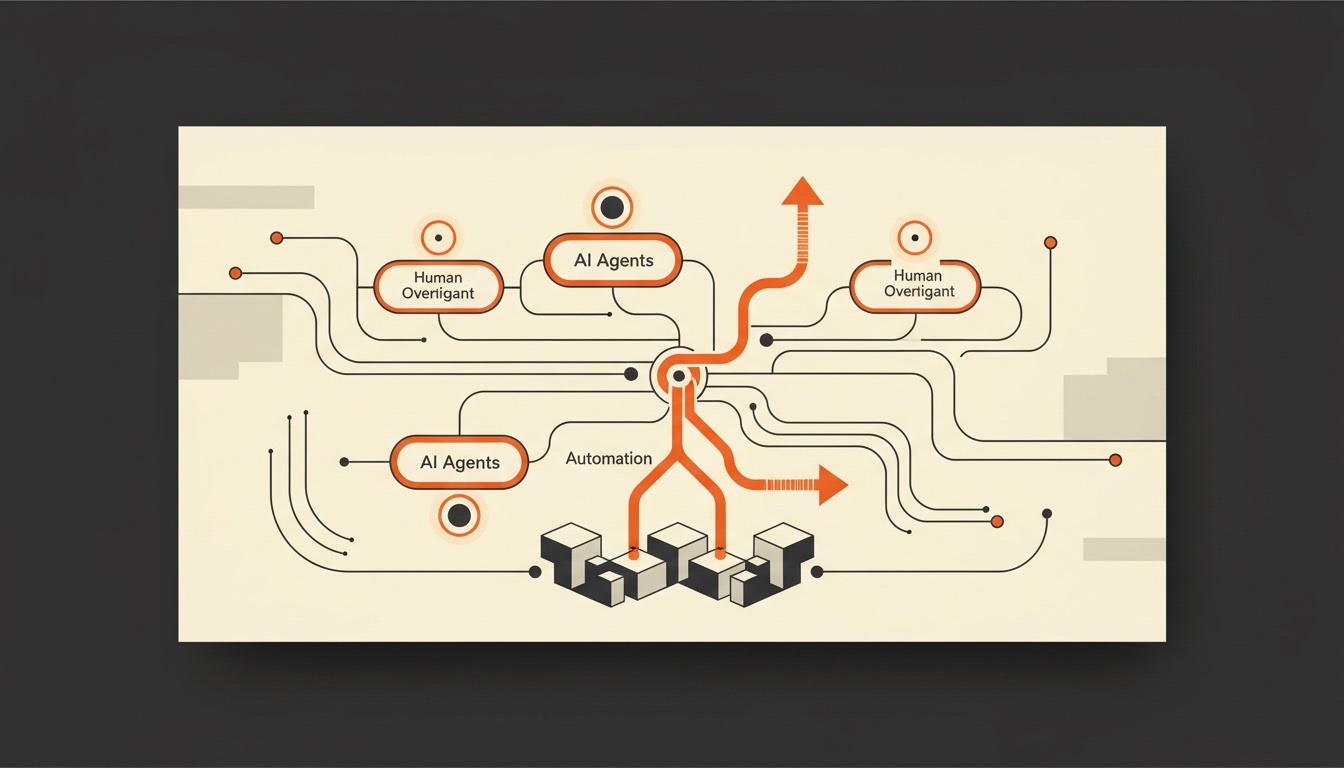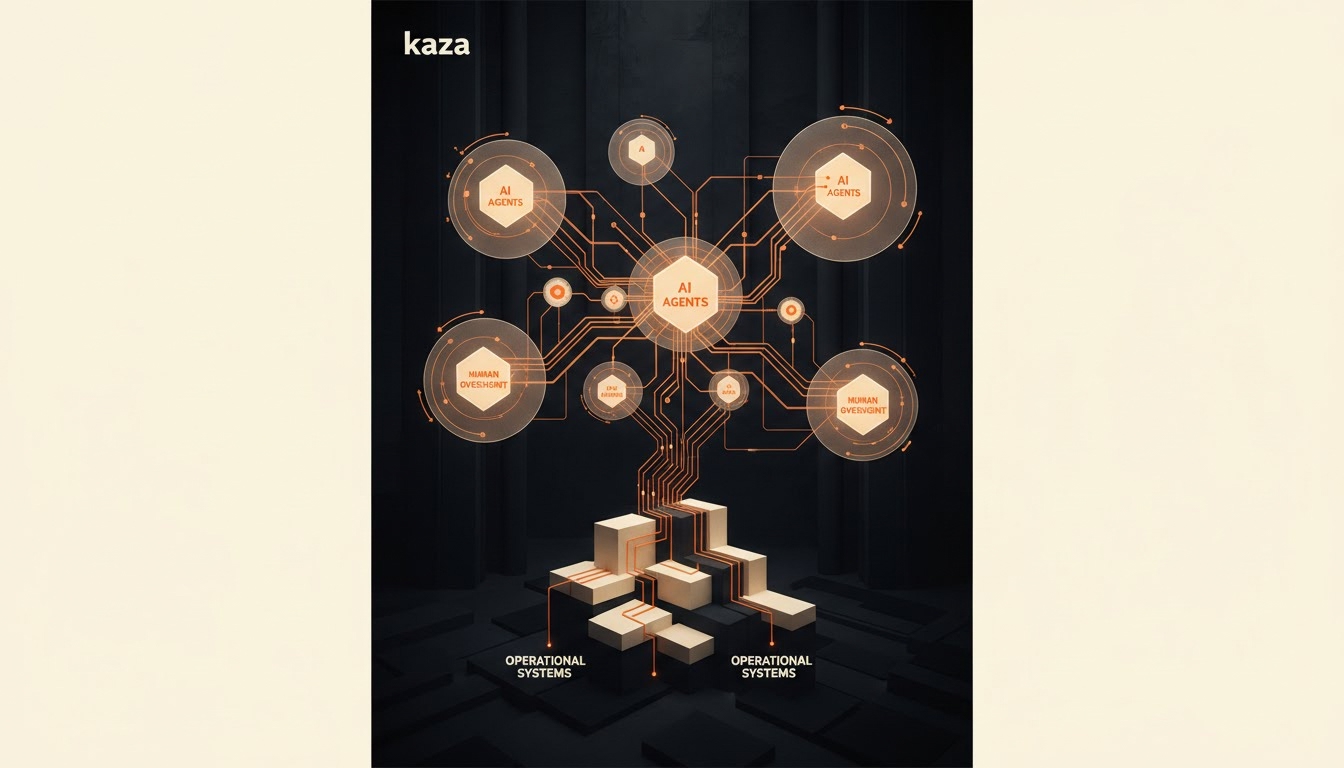
Functional leaders often seek to enhance operational capacity through AI agents. However, not every workflow is an ideal candidate. A thorough readiness assessment is crucial to identify high-friction work that genuinely benefits from agent support, rather than merely automating existing inefficiencies.
This guide provides a pragmatic framework to evaluate your workflows, distinguishing between fundamental process defects and tasks that managed AI agents can responsibly address. Our goal is to equip you with the tools to make informed decisions for effective and responsible AI deployment.
Understanding Workflow Suitability for AI Agents
The first step in assessing readiness is to differentiate between inherent process defects and problems that managed AI agents can genuinely solve. AI agents excel at augmenting human capacity by handling repetitive, rule-based tasks, but they do not inherently fix broken processes. Automating a flawed workflow merely accelerates its inefficiencies.
A workflow is suitable when its core logic is sound, but its execution is bottlenecked by volume, speed, or human error in repetitive tasks. If the process itself is ambiguous, inconsistent, or poorly designed, the focus should first be on process improvement, not AI agent deployment.
- AI agents amplify, not fix, process flaws.
- Focus on process improvement before automation.
- Suitable workflows have sound logic, high volume.
Data Quality and Accessibility as a Foundation
Managed AI agents rely heavily on structured, accessible, and high-quality data. Poor data quality — inconsistent formats, missing information, or fragmented sources — is a significant disqualifying condition. Agents cannot infer or correct data that is fundamentally flawed or unavailable.
Ensure that all necessary data inputs for the workflow are consistently available, accurately formatted, and accessible through secure, defined interfaces. This foundational requirement underpins the reliability and effectiveness of any AI agent integration, preventing 'garbage in, garbage out' scenarios.
- High-quality data is non-negotiable.
- Inconsistent data is a disqualifier.
- Ensure secure, defined data access.
Defining Clear Decision Logic and Human Oversight
For an AI agent to operate effectively, the decision logic within a workflow must be explicit and rule-based. Subjective judgments or frequent, uncodified exceptions are indicators that a workflow may not be ready. Every decision point an agent might encounter needs a clear, predefined rule or a designated human handoff.
Furthermore, robust human oversight and review mechanisms are paramount. The NIST AI Risk Management Framework [1] emphasizes the need for governance. Define clear points where human review, intervention, or approval are required, ensuring accountability and mitigating potential risks associated with autonomous operations.
- Explicit, rule-based decision logic is vital.
- Subjective judgments require human handoffs.
- NIST framework guides human oversight [1].
Establishing Baseline Measures and Disqualifying Conditions
Before deploying any AI agent, it is critical to establish baseline performance measures for the existing workflow. Without quantifiable metrics such as throughput, error rates, or cycle times, it becomes impossible to accurately assess the impact and return on investment of the AI agent. These baselines provide the 'before' picture.
Disqualifying conditions include workflows with highly variable or unpredictable inputs, those requiring complex ethical judgments without clear guidelines, or processes where regulatory compliance demands direct human execution without any AI assistance. These scenarios present unacceptable risks for AI agent deployment.
- Baseline metrics quantify AI agent value.
- Unpredictable inputs are disqualifying.
- Ethical judgments require human execution.
The Role of Managed AI Agents Versus Simple Automation
It is important to distinguish managed AI agents from simple automation or isolated chat tools. Managed AI agents, like those deployed by Kaza, are integrated into your existing tools, providing practical execution capacity with continuous improvement. They are designed for complex, multi-step workflows, not just single-task automation.
This distinction means considering not just the task, but the entire workflow's ecosystem, including data governance, security, and the organizational change required for adoption. A managed approach ensures responsible deployment, ongoing monitoring, and adaptation, addressing failure modes proactively rather than reactively.
- Managed agents integrate into complex workflows.
- They offer continuous improvement, not static automation.
- Consider ecosystem, governance, and organizational change.
Assessing your workflow's readiness for managed AI agents is a critical step towards enhancing operational capacity responsibly. By systematically evaluating process clarity, data quality, decision logic, and human oversight, you can identify workflows that are genuinely poised for augmentation, distinguishing them from those that require fundamental process improvements.
Utilize the provided scorecard and decision path to guide your evaluation. If your workflow demonstrates strong readiness, consider engaging Kaza. Our approach diagnoses workflows, designs the right system, and deploys managed AI agents into your existing tools, providing practical execution capacity and continuous improvement tailored to your specific needs.
Frequently asked questions
What is the most common reason a workflow is not ready for AI agents?
The most common reason is poorly defined processes or inconsistent data quality. AI agents amplify existing workflow characteristics; if the process is chaotic or data is unreliable, the agent will simply execute chaos more efficiently. Addressing these foundational issues is always the first step.
How do I measure baseline performance for a workflow?
To measure baseline performance, identify key metrics like average cycle time, error rate per transaction, total throughput per period, or cost per unit of work. Collect this data consistently over a representative period before introducing AI agents to establish a clear 'before' picture for comparison.
Can AI agents handle workflows that require some human judgment?
Yes, but with careful design. Workflows requiring human judgment must have clearly defined points for human review, intervention, or final approval. The AI agent can prepare information or handle initial steps, but the ultimate decision or complex ethical assessment remains with a human operator.
Is a workflow with sensitive data suitable for AI agents?
Workflows with sensitive data can be suitable, provided robust data security, privacy controls, and compliance measures are in place. Access must be strictly controlled and audited. Managed AI agents can be designed with these safeguards, but the organization must ensure its data governance meets all regulatory requirements.
What if my workflow has many exceptions?
If a workflow has many exceptions, it may indicate a need for process redesign before AI agent deployment. For unavoidable exceptions, the workflow must clearly define how the AI agent identifies and escalates these to a human for resolution, preventing the agent from making incorrect or unsupported decisions.